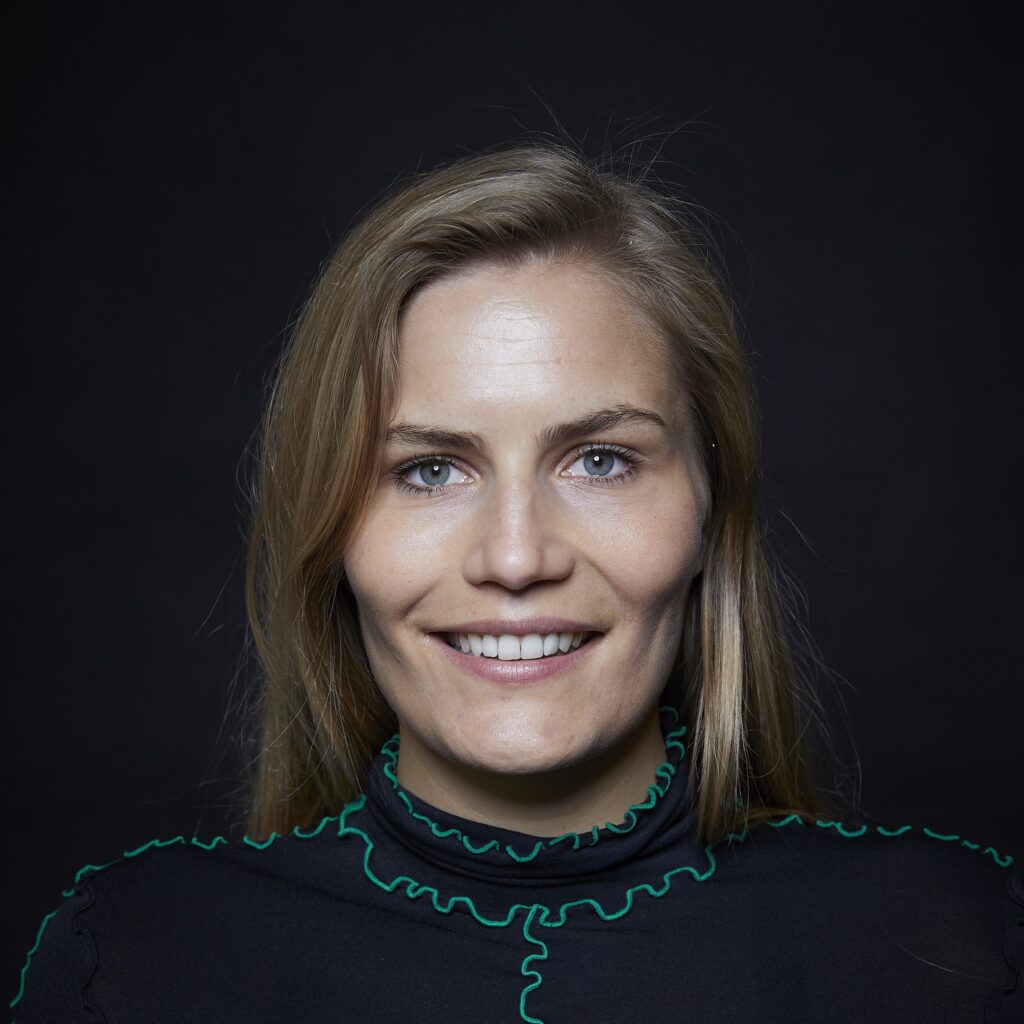
Christina Friis Blach
Co-founder, LYS Technologies

Mangus Evensen
Data & AI Associate, LYS Technologies
LYS stand, Foyer:
Wednesday and Thursday: 09:00–17:00
Friday: 09:00–15:30.
Visit the LYS stand in the Foyer to see Button V1 and Button PRO, try our apps, and explore the data portal.
Public LYS session:
Friday: 15:30–16:30, Room D.
Open to everyone.
Come see what real light exposure data actually reveals, we’ll walk through the first results from the wearable experiment and what they mean for how we experience light day to day.
Participation in the wearable experiment is only required from Wednesday to Friday to collect light exposure and rhythm.
Light from a human perspective
Light does more than enable vision. Through the eyes, it sends a key signal to our internal body clock shaping when we feel alert, when we grow tired, and how we function throughout the day. Lighting is typically measured at fixed points in space, while people experience it as they move through different environments over time. As a result, personal light exposure remains largely invisible even as more of us track steps, sleep, and calories. The daily dose and timing of light we receive, matched to our biological rhythm, is just as fundamental to health as air and food, yet it’s the one input we still don’t measure. LYS wearable sensors make personal light exposure measurable in everyday life. They let researchers gather real-world data, help individuals understand and improve their light habits, and give architects and lighting designers insight into how buildings are actually experienced by the people who use them. Our mission is to help people live healthier with light by connecting human biology, behaviour, and the built environment.
Two wearable sensors, two different purposes
LYS offers two wearable light sensors for different research needs. Both measure melanopic equivalent daylight illuminance (mEDI), correlated colour temperature (CCT), and near-infrared light (NIR).Button V1 is built for larger participant studies. Its accessible price point makes it possible to collect real-world light data at scale. Participants can also use the LYS Track app to explore their own exposure and understand their daily light patterns. Button PRO is built for in-depth academic research. Its 11 spectral channels deliver greater measurement depth and accuracy for studies that need detailed spectral data. Like researchers using the buttons for studies, architects and HR teams can use the buttons to check whether a space delivers the right rhythm and light dose based on people behavior/ movement, supporting not just lighting design, but productivity and wellbeing. Participants in the symposium experiment will use Button V1. Visit the LYS stand to explore both sensors, the LYS apps, and our data portal. Learn more about LYS and our wearable light sensors
Become part of the experiment
Registration is required and capped at 20 spots; once full, registration closes. Confirmed participants collect their Button V1 at the LYS stand in the Foyer on Wednesday between 09:00 and 14:00 devices not collected by 14:00 may be released to others. Wear the Button throughout the symposium as you move between sessions and through indoor, outdoor, and everyday environments. Results will be presented at the live session with the founder Christina on Friday. LYS will be at the Foyer stand Wednesday and Thursday from 09:00 to 17:00, and Friday from 09:00 to 15:30. On Friday from 15:30 to 16:30 in Room D, we’ll present an initial analysis of the participant data and explore patterns in personal light exposure. The session is open to everyone, whether or not you took part in the experiment. Together, we’ll explore what wearable light data can reveal about the relationship between human biology, daily behaviour, and the built environment.